
Smoke purification has captivated human consciousness for millennia, weaving through cultures as a sacred bridge between the physical and spiritual realms. ✨
From the smoldering sage bundles of Native American ceremonies to the fragrant incense spiraling through Buddhist temples, the practice of cleansing with smoke transcends geographical boundaries and religious doctrines. This ancient ritual speaks to something fundamental within the human experience—our eternal quest for purification, protection, and connection with forces beyond our immediate perception.
Today, as modern seekers rediscover traditional wisdom, smoke purification has experienced a profound renaissance. People around the world are incorporating these time-honored practices into their daily routines, seeking balance in an increasingly chaotic world. But what exactly makes smoke purification so powerful? What mysteries lie within these aromatic wisps that have commanded reverence across countless generations?
🌿 The Sacred Origins of Smoke Cleansing Across Civilizations
The history of smoke purification stretches back to humanity’s earliest days, when our ancestors first discovered fire’s transformative power. Archaeological evidence suggests that burning aromatic plants for ceremonial purposes dates back at least 60,000 years, making it one of our oldest continuous spiritual practices.
In ancient Egypt, priests burned frankincense and myrrh in elaborate ceremonies honoring the gods. The rising smoke was believed to carry prayers directly to the divine realm, creating a visible pathway between earth and heaven. Temples were constantly filled with these sacred fragrances, which were thought to purify both the space and those who entered.
Indigenous peoples of the Americas developed sophisticated smoke purification traditions long before European contact. The practice of “smudging” with white sage, sweetgrass, cedar, and tobacco became central to spiritual life. These ceremonies weren’t merely symbolic—they represented a complete worldview understanding the interconnectedness of all living things and the presence of spirit in every aspect of existence.
Asian traditions embraced smoke purification with equal fervor. In Hinduism, the practice of aarti involves waving incense before deities, while Buddhist monasteries have burned incense continuously for over two thousand years. Japanese Shinto shrines maintain sacred fires, and Chinese Taoist temples fill the air with complex blends of aromatic woods and resins.
Understanding the Metaphysical Mechanics: How Smoke Purification Works
The effectiveness of smoke purification operates on multiple dimensions simultaneously—physical, energetic, and psychological. Understanding these layered mechanisms reveals why this practice has endured across such vast stretches of time and culture.
On a physical level, many plants used in smoke purification contain antimicrobial compounds. Scientific research has demonstrated that burning sage can eliminate up to 94% of airborne bacteria, with effects lasting for 24 hours. The smoke from palo santo, frankincense, and other traditional materials also possesses measurable antiseptic properties.
The energetic dimension addresses what many traditions call the “subtle body” or energy field surrounding all living beings. According to this understanding, negative experiences, emotions, and interactions can create energetic debris that clings to people and spaces. Smoke purification is believed to break up and disperse these stagnant energies, much like wind clearing away fog.
Psychologically, the ritual of smoke purification creates a powerful anchor point for intention and mindfulness. The sensory experience—the sight of rising smoke, distinctive aromas, and deliberate movements—shifts consciousness from everyday concerns into a more contemplative state. This altered awareness facilitates emotional release and mental clarity.
The Role of Intention in Amplifying Purification Power
Across traditions, practitioners emphasize that smoke alone isn’t sufficient—the cleansing must be accompanied by clear intention. This principle acknowledges consciousness as an active force that directs and amplifies the purification process.
Before beginning any smoke cleansing ritual, experienced practitioners recommend centering yourself and articulating your purpose. Are you clearing negative energy from an argument? Welcoming positive intentions into a new home? Preparing sacred space for meditation or ceremony? The specificity of your intention creates a focused channel for the work.
Many traditions teach that speaking your intentions aloud—through prayer, affirmation, or simple statement—further empowers the practice. Words carry vibration, and combining spoken intention with the physical action of smoke cleansing creates a multi-layered energetic effect.
🔥 Sacred Plants and Their Unique Spiritual Signatures
Different plants carry distinct energetic qualities and traditional associations. Understanding these properties allows practitioners to select materials aligned with their specific needs and intentions.
White Sage: The Powerful Purifier
White sage (Salvia apiana) holds sacred status in many Native American traditions and has become the most recognized smoke purification tool worldwide. Its strong, pungent aroma is associated with deep cleansing—clearing heavy, stagnant energies and providing protection.
Traditional protocols emphasize harvesting sage respectfully and using it sparingly. The plant itself is considered sacred, and its use should never be casual or disrespectful. White sage is particularly effective for clearing spaces after illness, conflict, or when moving into a new home.
Palo Santo: Holy Wood of Transformation
Palo santo, meaning “holy wood” in Spanish, comes from trees native to South America. Unlike sage’s intense cleansing, palo santo works more gently, bringing sweetness and positivity while clearing negativity. Its warm, woody-citrus aroma is uplifting and grounding simultaneously.
Traditionally used by Incan shamans, palo santo is harvested only from naturally fallen branches, as the essential oils develop during the wood’s natural decomposition. This sustainable practice honors the tree’s spirit and ensures the wood carries maximum energetic potency.
Frankincense and Myrrh: Ancient Temple Fragrances
These precious resins have been valued since antiquity, literally worth their weight in gold. Frankincense elevates spiritual consciousness and facilitates connection with higher wisdom, making it ideal for meditation and prayer. Myrrh provides grounding and protection while supporting emotional healing and releasing trauma.
Burning these resins requires charcoal tablets specifically designed for incense. The ritual of preparing and tending the charcoal adds another layer of mindfulness to the purification practice.
Sweetgrass: Calling in Blessings
Where sage clears away negativity, sweetgrass invites positive energy and blessings. Often braided into beautiful ropes, sweetgrass carries a sweet, vanilla-like fragrance that Native American traditions associate with kindness, healing, and peace. It’s commonly used after sage cleansing to fill the cleared space with beneficial energy.
Performing Your Own Smoke Purification Ritual: A Step-by-Step Guide
Creating an effective smoke purification practice doesn’t require elaborate tools or years of training. With respect, intention, and basic understanding, anyone can incorporate these ancient techniques into their spiritual practice.
Preparing Your Space and Materials
Before beginning, gather your materials: your chosen sacred plant or resin, a heat-safe container (abalone shells are traditional, but ceramic bowls work perfectly), matches or a lighter, and optionally a feather or fan for directing smoke.
Open windows or doors to allow negative energy an exit path and fresh air to circulate. Some traditions teach that energy being cleared must have somewhere to go—closed spaces can simply redistribute stagnant energy rather than releasing it.
Take several deep breaths to center yourself. You might say a prayer, set an intention, or simply bring your full attention to the present moment. This preparation phase is crucial for effective cleansing.
The Cleansing Process
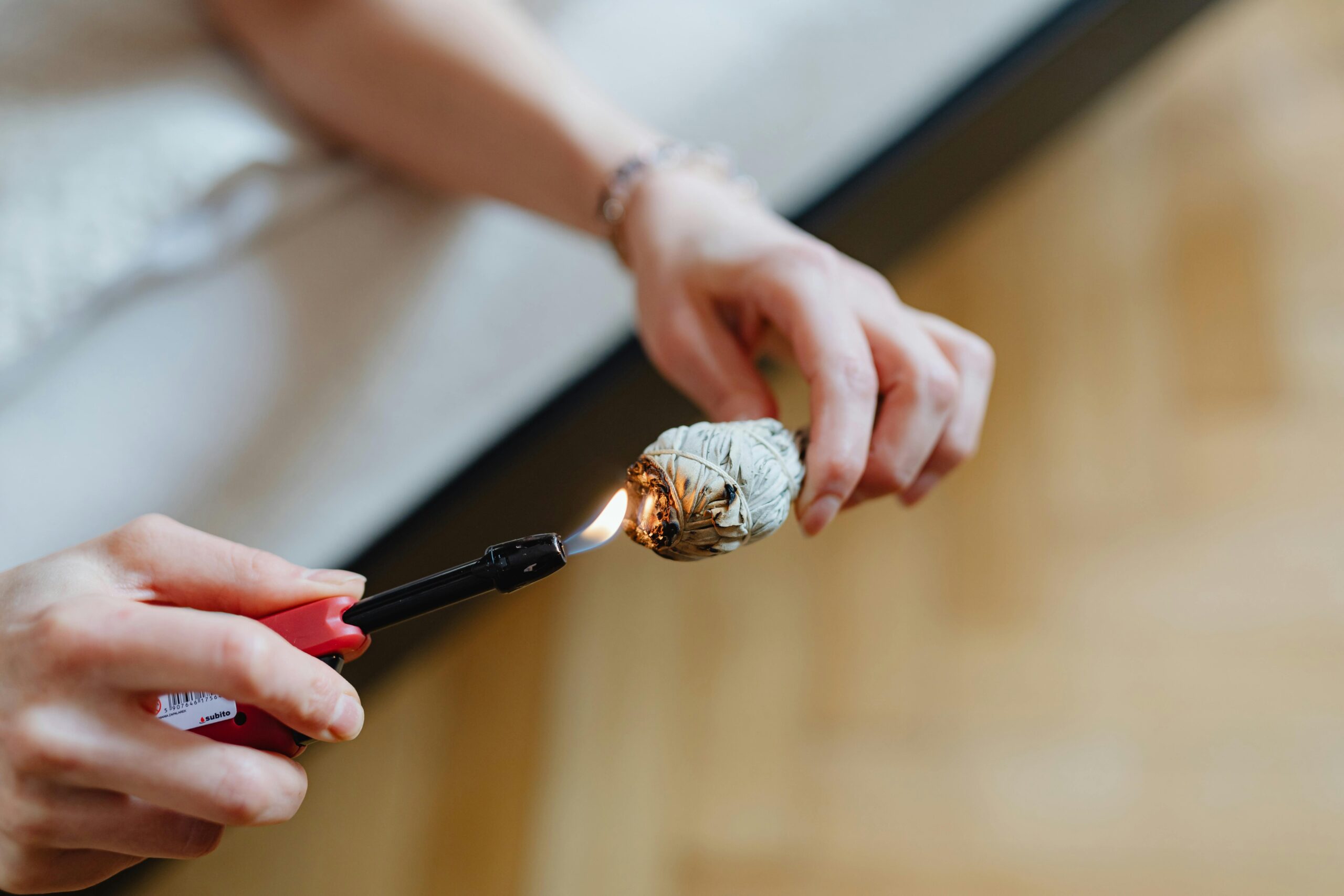
Light your sage bundle, palo santo stick, or charcoal (if using resins) and allow it to catch fire briefly before gently blowing out the flame, leaving smoldering embers that produce smoke. If using a sage bundle, you may need to relight it periodically as it tends to extinguish.
For personal cleansing, begin at your feet and move the smoke upward along your body, bringing it around your back, over your head, and down your front. Some practitioners direct smoke over their heart center and crown multiple times, focusing on areas that feel heavy or blocked.
When cleansing a space, start at the entrance and move clockwise (or counterclockwise—traditions vary) around the perimeter. Pay special attention to corners where energy tends to accumulate, doorways, windows, and areas associated with stress or conflict. Move deliberately, visualizing the smoke absorbing and transforming negative energy.
Closing the Ritual
When you feel the cleansing is complete, express gratitude—to the plant spirits, to your guides or higher power, or simply to the process itself. Carefully extinguish your smudge stick in sand or soil, ensuring it’s completely out before storing.
Spend a few moments in the cleared space, noticing how the energy feels different. Many people report a sense of lightness, clarity, or peace following smoke purification.
⚡ Modern Science Meets Ancient Wisdom
Contemporary research is beginning to validate what traditional practitioners have always known—smoke purification produces measurable effects beyond placebo or belief.
A 2007 study published in the Journal of Ethnopharmacology found that burning medicinal smoke reduced airborne bacteria by 94%, with the air remaining significantly cleaner for 24 hours. The researchers noted that certain smoke preparations had been “used all over the world as an antiseptic” and validated this traditional use through rigorous testing.
Neuroscience research on ritual and ceremony has revealed that engaging in intentional practices activates specific brain regions associated with emotional regulation, stress reduction, and enhanced focus. The multisensory nature of smoke purification—combining scent, sight, movement, and intention—creates particularly powerful neurological effects.
Studies on aromatherapy demonstrate that plant compounds, when inhaled, directly affect the limbic system—the brain’s emotional center. Frankincense, for instance, contains boswellic acids that demonstrate anti-anxiety and antidepressant properties in laboratory studies.
🌙 Integrating Smoke Purification Into Daily Spiritual Practice
While elaborate ceremonies have their place, smoke purification can also become a simple, grounding element of everyday life. Regular practice maintains clear energy in your living spaces and supports your personal energetic hygiene.
Consider cleansing your home weekly, particularly high-traffic areas and bedrooms where you spend significant time. Many practitioners smudge after arguments, illness, or visits from people carrying heavy energy. Your bedroom benefits from regular clearing, as sleep makes us energetically vulnerable and we unconsciously process emotional material during rest.
Create a morning or evening ritual incorporating smoke purification. A brief smudging while setting intentions for the day ahead or releasing concerns before sleep becomes a powerful anchor in your spiritual practice. The consistency matters more than duration—even two minutes of mindful cleansing creates beneficial effects.
Use smoke purification to mark transitions and thresholds. Cleanse yourself when returning home from stressful environments, before meditation or spiritual work, or when beginning creative projects. These ritual markers help consciousness shift between different modes and contexts.
Respecting Cultural Origins and Avoiding Appropriation
As smoke purification gains mainstream popularity, it’s essential to approach these practices with cultural sensitivity and respect. Many traditions we now call “wellness practices” remain sacred ceremonies within their originating cultures.
Educate yourself about the specific traditions you’re drawing from. Understand the difference between appreciation and appropriation. Using white sage while remaining ignorant of Native American history and ongoing struggles represents extraction rather than genuine engagement.
When possible, purchase materials from indigenous or traditional suppliers who harvest sustainably and deserve economic benefit from their cultural heritage. Be mindful that some plants, particularly white sage, face overharvesting due to commercial demand.
Consider alternatives if you’re uncomfortable with potential appropriation. Many cultures have smoke purification traditions—explore your own ancestry for historical practices, or work with plants native to your bioregion. Rosemary, lavender, juniper, and cedar all carry purifying properties and may represent more appropriate choices depending on your background.
💫 Deepening Your Practice: Advanced Techniques and Considerations
As you develop confidence with basic smoke purification, you might explore more nuanced applications and combinations.
Experiment with creating custom blends. Combining complementary plants creates layered effects—sage for clearing followed by sweetgrass for blessing, or frankincense mixed with lavender for calming yet elevated meditation spaces. Keep notes on your experiments, recording which combinations serve different purposes.
Explore smoke purification for objects, not just spaces and people. Cleanse crystals, jewelry, tarot cards, and other spiritual tools regularly. New or secondhand items particularly benefit from clearing, as they may carry energy from previous owners or environments.
Investigate the lunar and seasonal timing of purification work. Many traditions associate full moons with releasing and new moons with intention-setting. Seasonal changes mark natural transition points ideal for deep space clearing and energetic renewal.
The Transformative Journey: Beyond Technique to Embodied Wisdom
Ultimately, smoke purification transcends mechanical technique to become a language of relationship—with plant spirits, with the unseen dimensions of existence, and with your own deepest self. Regular practice develops sensitivity to subtle energies that initially seem mysterious or imaginary.
You’ll begin noticing how spaces feel before and after cleansing, recognizing when your own energy field needs attention, and developing intuitive guidance about which plants to use in different circumstances. This embodied wisdom cannot be taught through articles or books—it emerges only through consistent, mindful practice.
The smoke becomes a teacher, revealing lessons about impermanence, transformation, and the constant flow of energy through all existence. As you watch wisps rise and dissipate, you’re witnessing a profound truth: nothing is static, all is process, and we possess the power to consciously participate in the purification and elevation of consciousness itself.
In our contemporary world—overstimulated, disconnected from nature, and often spiritually depleted—these ancient practices offer more than quaint tradition. They provide genuine technology for maintaining energetic clarity, emotional balance, and spiritual connection. The mystical power of smoke purification lies not in superstition but in its capacity to reconnect us with dimensions of experience our culture has forgotten but our souls still recognize.
As you incorporate these practices into your life, approach them with reverence, curiosity, and patience. Allow the wisdom to unfold gradually, trusting that these techniques have endured for millennia because they access something fundamentally true about human consciousness and our relationship with the sacred. The smoke rises, carrying your intentions, clearing your path, and reminding you that transformation is always possible—one breath, one ritual, one moment of mindful presence at a time. 🕊️